Why Sustainable Homes Are the Future of Indian Real Estate
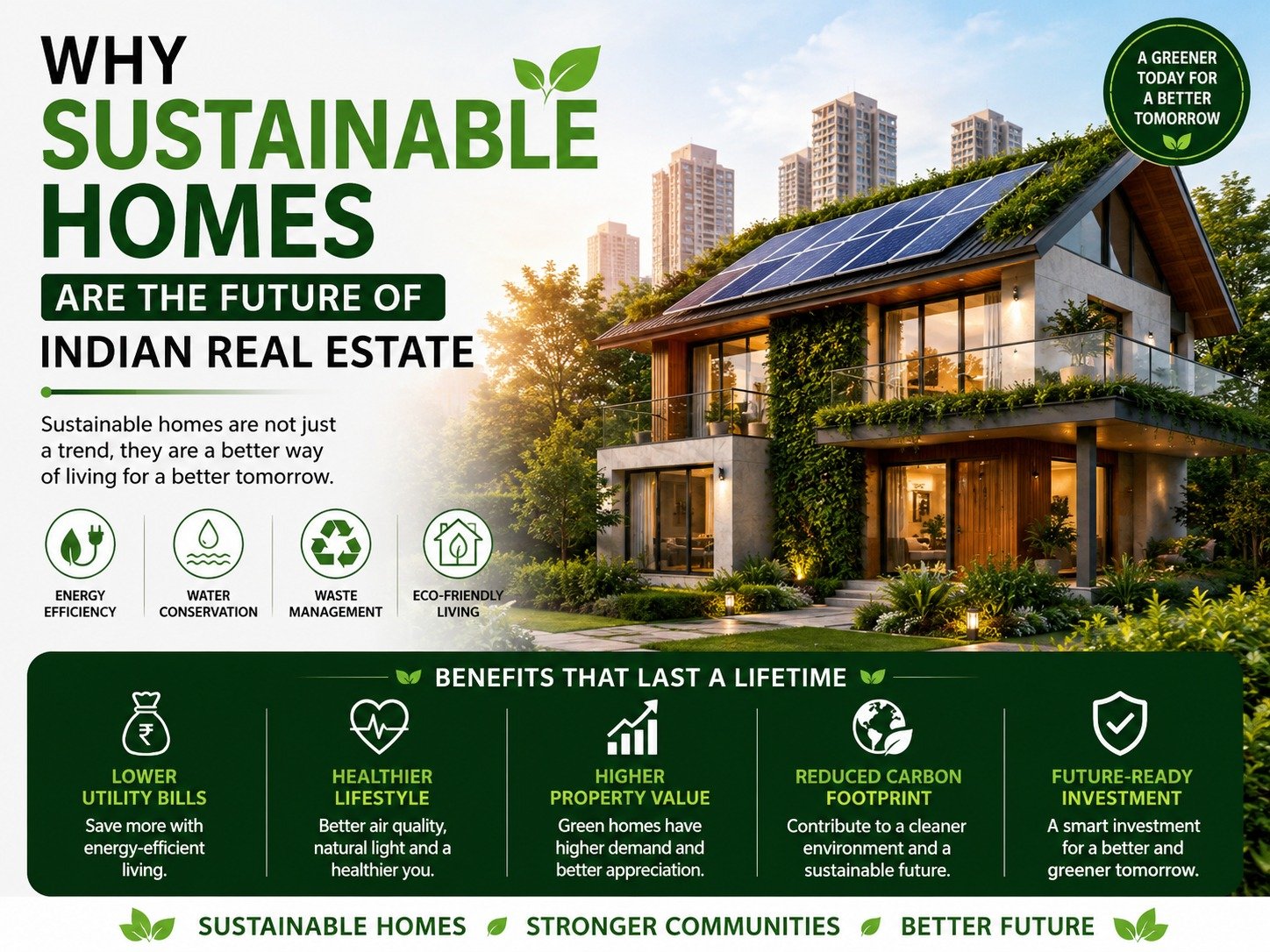
The Indian real estate market is undergoing a significant transformation as homebuyers increasingly prioritize sustainability, energy efficiency, and healthier living spaces. With growing environmental concerns, rising electricity costs, and government initiatives promoting green development, sustainable homes have become more than just a trend—they are the future of Indian real estate.
From reduced utility bills to improved indoor air quality and long-term property value, sustainable homes offer multiple benefits for homeowners, investors, and the environment. As India’s urban population continues to grow, eco-friendly housing solutions are becoming essential for creating smarter and more resilient cities.
In this blog, we’ll explore why sustainable homes are shaping the future of Indian real estate and what buyers should consider before investing.
What Are Sustainable Homes?
Sustainable homes are residential properties designed to minimize environmental impact while maximizing energy efficiency, water conservation, and occupant comfort. These homes incorporate eco-friendly construction materials, renewable energy systems, and smart technologies to reduce resource consumption.
Key features of sustainable homes include:
- Solar power systems
- Rainwater harvesting
- Energy-efficient lighting
- Natural ventilation
- Water-saving fixtures
- Waste management systems
- Green landscaping
- Eco-friendly construction materials
These features help reduce carbon emissions while lowering maintenance and operational costs.
Growing Demand for Green Homes in India
Indian homebuyers are becoming increasingly aware of environmental issues and the long-term benefits of sustainable living. Millennials and Gen Z buyers, in particular, prefer homes that support healthier lifestyles and lower utility expenses.
Several factors are driving this demand:
- Rising electricity costs
- Water scarcity in urban areas
- Increasing awareness of climate change
- Government incentives for green buildings
- Better resale value of eco-friendly properties
Developers are responding by launching residential projects with green certifications and sustainable infrastructure.
Lower Energy Costs
One of the biggest advantages of sustainable homes is reduced energy consumption.
Features such as:
- Solar panels
- LED lighting
- Energy-efficient appliances
- Smart thermostats
- High-performance insulation
can significantly reduce monthly electricity bills.
Although sustainable homes may have a slightly higher initial cost, homeowners recover their investment through long-term savings on utilities.
Water Conservation
Water shortages have become a growing concern in many Indian cities. Sustainable homes address this challenge through efficient water management systems.
Common water-saving solutions include:
- Rainwater harvesting
- Low-flow faucets
- Dual-flush toilets
- Greywater recycling
- Drip irrigation for landscaping
These measures reduce water consumption while ensuring long-term availability.
Healthier Living Environment
Sustainable homes are designed to improve indoor air quality and overall well-being.
Benefits include:
- Better natural ventilation
- Reduced indoor pollution
- Non-toxic building materials
- Increased natural lighting
- Improved thermal comfort
These features contribute to healthier lifestyles and greater comfort for families.
Increased Property Value
Green homes generally command higher resale values because buyers recognize their long-term financial benefits.
Properties with sustainable features often attract:
- Faster sales
- Higher rental demand
- Better appreciation
- Lower maintenance costs
As sustainability becomes a standard expectation, eco-friendly homes are likely to outperform conventional properties in the coming years.
Government Support for Sustainable Housing
The Indian government is actively encouraging green construction through various policies and incentives.
Some initiatives include:
- Energy-efficient building codes
- Smart Cities Mission
- Green building certifications
- Solar energy subsidies
- Sustainable urban development programs
These initiatives encourage developers to adopt environmentally responsible construction practices.
Smart Technology and Sustainable Homes
Modern sustainable homes integrate smart technologies to improve efficiency.
Popular smart home features include:
- Smart lighting systems
- Motion sensors
- Automated climate control
- Smart water monitoring
- Energy consumption tracking
- Remote home management
These technologies help homeowners optimize resource usage while enhancing convenience.
Green Building Certifications
Many residential projects now seek green certifications that validate their sustainability standards.
Popular certifications include:
- IGBC (Indian Green Building Council)
- GRIHA (Green Rating for Integrated Habitat Assessment)
- LEED (Leadership in Energy and Environmental Design)
Certified projects often provide better construction quality and long-term operational efficiency.
Benefits for Real Estate Investors
Sustainable properties are becoming attractive investment opportunities due to their growing demand.
Advantages include:
- Higher rental income
- Better occupancy rates
- Long-term appreciation
- Lower operating costs
- Increased marketability
As environmental awareness continues to rise, green homes are expected to deliver stronger returns.
Challenges of Sustainable Housing
While sustainable homes offer numerous advantages, certain challenges remain.
These include:
- Higher upfront construction costs
- Limited awareness among some buyers
- Availability of eco-friendly materials
- Skilled workforce requirements
However, declining technology costs and increasing demand are gradually overcoming these barriers.
The Future of Indian Real Estate
Experts believe sustainability will become a defining factor in India’s real estate sector over the next decade.
Future developments are expected to focus on:
- Net-zero energy homes
- Solar-powered communities
- Electric vehicle charging infrastructure
- Smart waste management
- Climate-resilient construction
- Carbon-neutral residential projects
Developers who embrace sustainability today are likely to gain a competitive advantage in the evolving market.
Tips for Homebuyers
When purchasing a sustainable home, consider the following:
- Check for green building certifications.
- Verify energy-efficient features.
- Assess water conservation systems.
- Review maintenance costs.
- Evaluate solar energy options.
- Consider long-term resale value.
- Research the developer’s sustainability track record.
These factors can help ensure you invest in a future-ready property.
Conclusion
Sustainable homes are no longer a niche concept—they represent the future of Indian real estate. As environmental concerns, energy costs, and urban challenges continue to grow, buyers increasingly seek homes that offer efficiency, comfort, and long-term value.
From lower utility bills and healthier living spaces to increased property appreciation and government support, sustainable housing provides benefits that extend far beyond environmental responsibility. Whether you’re a first-time homebuyer or a seasoned investor, choosing a sustainable home is an investment in both your future and the planet.
As India’s real estate landscape evolves, eco-friendly homes will play a central role in building smarter, greener, and more resilient communities.