Gurgaon to Rewari Metro: Route, Benefits & Latest Updates
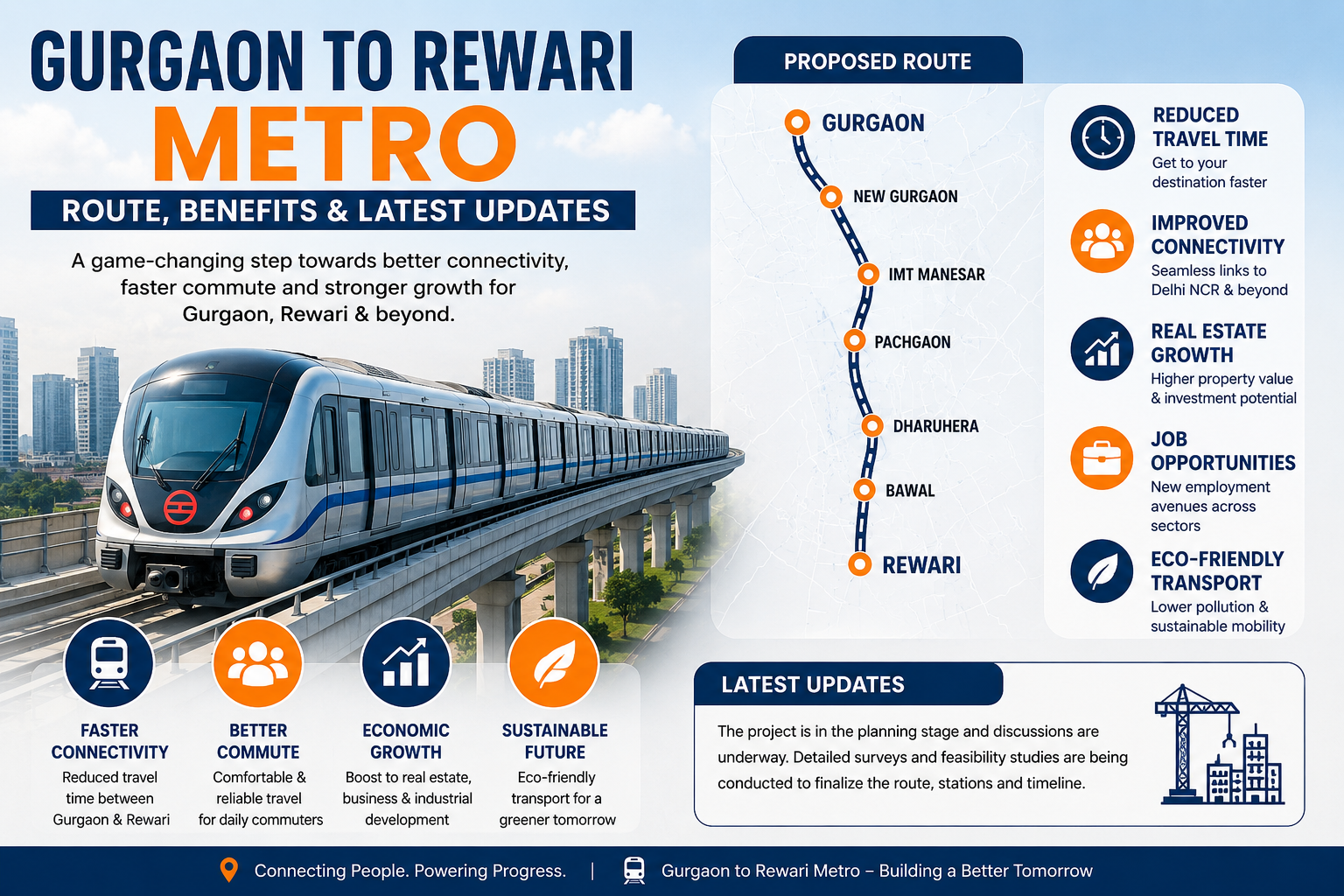
The metro corridor is expected to strengthen connectivity not only between Gurgaon and Rewari but also with Delhi NCR, making daily commuting more convenient for thousands of professionals, students, and business travelers. With ongoing investments in highways, expressways, and industrial corridors, the Gurgaon to Rewari Metro is poised to become a major driver of economic growth across southern Haryana.
In this guide, we’ll explore the proposed route, expected stations, benefits, latest developments, and how the project could influence the region’s real estate market.
Table of Contents
- What is the Gurgaon to Rewari Metro Project?
- Why is the Metro Project Important?
- Proposed Gurgaon to Rewari Metro Route
- Expected Metro Stations
- Integration with Other Transport Networks
- Benefits for Daily Commuters
- Economic Impact on Haryana
- Impact on Real Estate
- Latest Updates on the Gurgaon to Rewari Metro
- Challenges and Expected Timeline
- Frequently Asked Questions
- Conclusion
What is the Gurgaon to Rewari Metro Project?
The Gurgaon to Rewari Metro is a proposed rapid transit corridor aimed at improving public transportation between Gurgaon and Rewari. The project is part of Haryana’s broader vision to strengthen regional connectivity, support urban expansion, and reduce dependence on private vehicles.
With Gurgaon already connected to Delhi through the Delhi Metro network and Rapid Metro, extending efficient transit towards Rewari would improve accessibility for residents, employees, and businesses. The project is expected to complement existing transportation infrastructure, including national highways, expressways, and railway networks.
Apart from easing traffic congestion, the metro corridor is expected to encourage sustainable urban development and reduce carbon emissions by promoting public transportation.
Why is the Gurgaon to Rewari Metro Important?
The Gurgaon to Rewari Metro is significant because it addresses several transportation challenges currently faced by commuters.
1. Faster Daily Commute
Thousands of professionals travel between Gurgaon and nearby cities every day. Metro connectivity can significantly reduce travel time compared to road transportation during peak traffic hours.
2. Better Connectivity
The metro is expected to improve access between residential areas, business districts, industrial hubs, and educational institutions.
3. Reduced Traffic Congestion
Heavy traffic on NH-48 often causes delays. A metro network offers a reliable alternative, reducing pressure on highways.
4. Environment-Friendly Transportation
Metro systems help lower fuel consumption and vehicle emissions, supporting cleaner and greener urban transportation.
5. Regional Economic Growth
Improved connectivity encourages commercial investment, industrial expansion, and residential development across southern Haryana.
Proposed Gurgaon to Rewari Metro Route
Although the final alignment is subject to government approval and planning updates, the Gurgaon to Rewari Metro is expected to connect key residential, commercial, and industrial zones.
The proposed corridor is likely to improve access to:
- Gurgaon City
- New Gurgaon
- Manesar
- Industrial corridors
- Dharuhera
- Bawal
- Rewari
These locations are already witnessing rapid residential and commercial development, making metro connectivity highly beneficial for future growth.
The corridor may also integrate with existing metro lines and other transportation systems to provide seamless travel across the NCR region.
Expected Metro Stations
While official station details are yet to be finalized, the proposed Gurgaon to Rewari Metro corridor may include strategically located stations serving key urban and industrial areas.
Potential locations may include:
- Millennium City Centre Gurgaon
- Hero Honda Chowk
- IMT Manesar
- Pachgaon
- Dharuhera
- Bawal
- Rewari City
These stations are expected to improve accessibility for both local residents and long-distance commuters.
Integration with Existing Transportation
One of the biggest advantages of the Gurgaon to Rewari Metro is its potential integration with existing transport infrastructure.
It may connect with:
- Delhi Metro Network
- Rapid Metro Gurgaon
- NH-48
- Delhi-Mumbai Expressway
- Haryana Orbital Rail Corridor
- Indian Railways
- Regional bus terminals
Such integration would create a comprehensive transportation network across Haryana and Delhi NCR.
Benefits for Daily Commuters
The proposed metro line offers several advantages for people traveling between Gurgaon and Rewari.
Reduced Travel Time
Metro services are expected to provide faster and more predictable travel than road transport during rush hours.
Affordable Transportation
Public metro services generally cost less than private taxis or personal vehicle expenses, helping commuters save money.
Improved Safety
Metro systems provide secure, organized, and reliable transportation compared to long road commutes.
Comfortable Journey
Air-conditioned coaches, dedicated stations, and scheduled services make metro travel more convenient.
Better Work-Life Balance
Less commuting time means professionals can spend more time with family and reduce travel-related stress.
Economic Impact of the Gurgaon to Rewari Metro
Large-scale infrastructure projects often stimulate economic growth, and the Gurgaon to Rewari Metro is expected to be no exception.
Increased Business Opportunities
Improved accessibility encourages companies to establish offices, warehouses, and manufacturing facilities in emerging locations.
Industrial Growth
Industrial areas such as IMT Manesar, Dharuhera, and Bawal are likely to benefit from enhanced employee mobility and logistics.
Employment Generation
Construction, operations, maintenance, and associated commercial activities are expected to create numerous employment opportunities.
Tourism and Hospitality
Improved connectivity may also support tourism, hotels, restaurants, and retail businesses across the region.
Impact on Real Estate
The Gurgaon to Rewari Metro could significantly influence residential and commercial property markets.
Historically, metro connectivity has increased property demand in several NCR cities.
Potential benefits include:
- Higher property appreciation
- Increased rental demand
- Better residential development
- Growth in commercial projects
- Improved infrastructure around metro stations
Areas such as Manesar, Dharuhera, Bawal, and Rewari may attract more homebuyers and investors due to improved accessibility.
Investors often prefer locations with planned metro connectivity because they offer long-term growth potential.