How Capital Gains Tax Works on Real Estate Investments
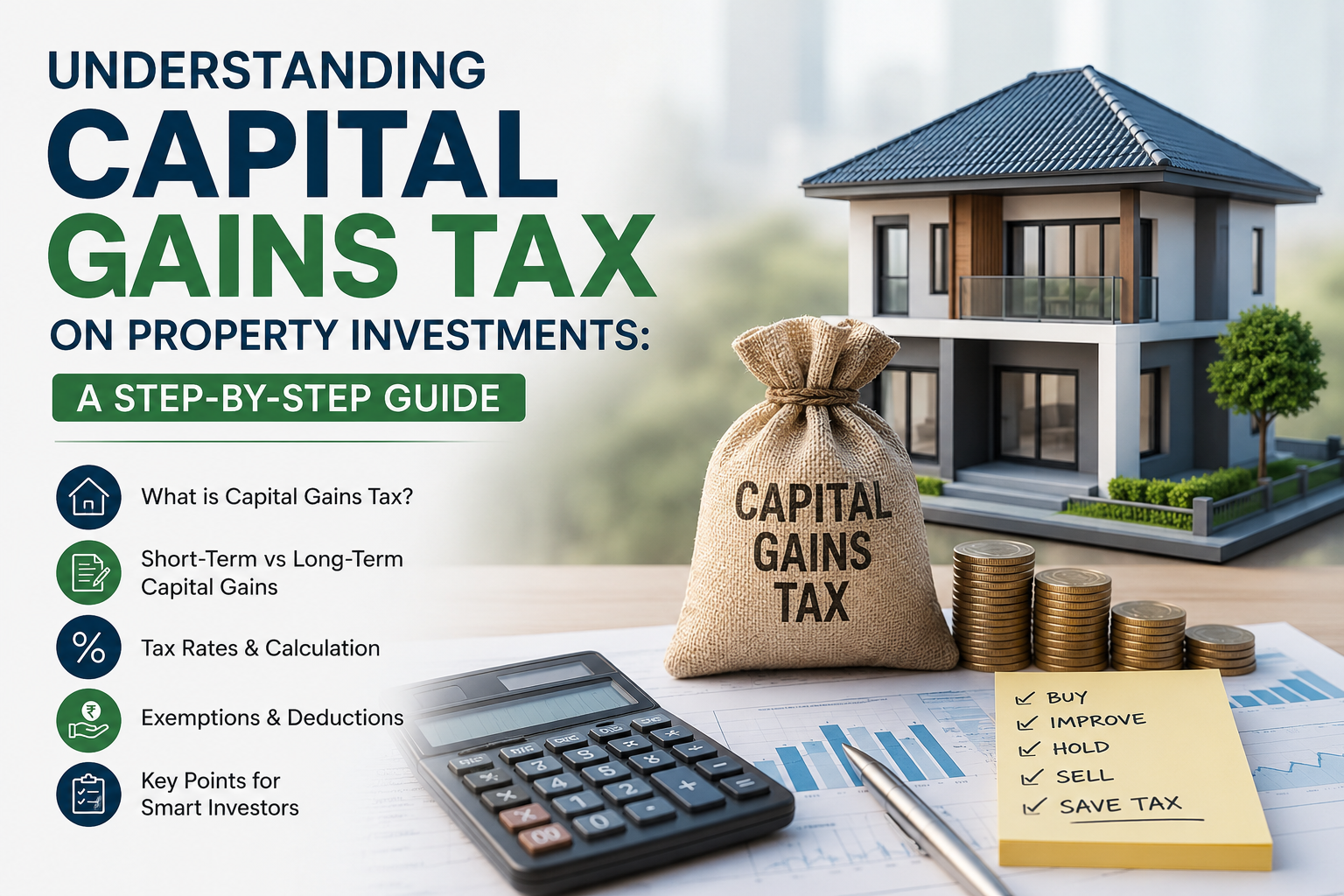
Real estate has always been considered one of the most reliable wealth-building assets in India. Whether it is a residential apartment in Gurgaon, a commercial property in Delhi NCR, or a plotted development in an emerging city, property investments continue to attract buyers looking for long-term financial growth. However, while investors focus heavily on appreciation, rental income, and future returns, many often overlook one important aspect – capital gains tax.
Understanding how capital gains tax works is essential for every property investor. It directly affects the final profit earned from a property transaction and can significantly impact investment planning. From determining whether the gain is short-term or long-term to learning about tax exemptions and reinvestment options, knowing the basics can help investors save money legally and make smarter financial decisions.
This guide explains capital gains tax on property investments in a simple and practical way, helping buyers, sellers, and investors understand the taxation process with clarity.
What is Capital Gains Tax?
Capital gains tax is the tax imposed on the profit earned when a property is sold at a price higher than its purchase cost. In simple words, if you buy a property for ₹50 lakh and sell it later for ₹80 lakh, the profit earned becomes a capital gain, and the government taxes that gain according to applicable laws.
The tax is not calculated on the entire sale amount but only on the profit earned after considering eligible deductions and indexed costs.
Capital gains taxation applies to:
- Residential properties
- Commercial properties
- Land or plots
- Inherited properties
- Gifted properties
- Real estate investment assets
The amount of tax depends mainly on how long the property was held before selling.
Types of Capital Gains on Property
Capital gains on real estate are divided into two categories:
1. Short-Term Capital Gains (STCG)
If a property is sold within 24 months of purchase, the profit earned is treated as short-term capital gain.
Short-term capital gains are added to the seller’s total annual income and taxed according to the applicable income tax slab. This means the tax liability may become significantly higher for individuals in higher income brackets.
For example:
- Purchase Price: ₹60 lakh
- Selling Price: ₹75 lakh
- Holding Period: 18 months
- Profit: ₹15 lakh
This ₹15 lakh will be taxed according to the seller’s income tax slab.
2. Long-Term Capital Gains (LTCG)
If the property is held for more than 24 months before being sold, the gain becomes a long-term capital gain.
Long-term capital gains on property are generally taxed at 12.5% without indexation benefits under the revised tax structure introduced after Budget 2024.
Long-term investments are often considered more tax-efficient because investors can claim various exemptions under the Income Tax Act.
How Capital Gains on Property are Calculated
Capital gains are calculated using a simple formula:
Capital Gain = Sale Price – (Purchase Price + Improvement Cost + Transfer Expenses)
Let us understand this with an example.
Example:
- Property Purchase Price: ₹45 lakh
- Renovation Cost: ₹5 lakh
- Brokerage & Legal Expenses: ₹2 lakh
- Sale Price: ₹75 lakh
Calculation:
Total Cost = ₹45 lakh + ₹5 lakh + ₹2 lakh = ₹52 lakh
Capital Gain = ₹75 lakh – ₹52 lakh = ₹23 lakh
This ₹23 lakh becomes taxable according to whether the gain is short-term or long-term.
Importance of Holding Period in Real Estate
The holding period plays a major role in property taxation.
Many investors prefer holding real estate for more than two years because long-term gains often provide better tax planning opportunities and exemptions. Short-term property flipping may generate quick profits, but it can also attract a higher tax burden.
For serious investors, strategic timing of property sales can make a significant difference in net returns.
Tax Exemptions Available on Capital Gains
The Indian Income Tax Act provides several exemptions that help property owners reduce or completely avoid capital gains tax if certain conditions are fulfilled.
Section 54
Under Section 54, an individual can claim exemption on long-term capital gains by reinvesting the profit into another residential property.
Conditions include:
- The new property must be purchased within 1 year before or 2 years after selling the old property.
- Alternatively, a new house can be constructed within 3 years.
- The exemption applies only to residential properties.
This provision encourages reinvestment in the housing sector while helping investors save taxes.
Section 54EC
Investors can also save long-term capital gains tax by investing gains in specified government bonds.
These bonds are usually issued by:
- National Highways Authority of India (NHAI)
- Rural Electrification Corporation (REC)
Key points:
- Investment must be made within 6 months of property sale.
- Maximum investment allowed is ₹50 lakh.
- Bonds come with a lock-in period.
This option is preferred by investors who do not wish to buy another property immediately.
Section 54F
Section 54F applies when capital gains arise from selling assets other than residential property and the gains are invested in a residential house.
This provision helps diversify investments while still offering tax benefits.
Capital Gains Tax on Inherited Property
Inherited property is also subject to capital gains tax when sold.
However, the holding period of the original owner is considered while calculating long-term or short-term gains. The purchase cost is usually determined based on the original acquisition value.
For families holding ancestral property for generations, professional valuation may be required to determine fair market value and tax liability.
Capital Gains Tax on Jointly Owned Property
If a property has multiple owners, capital gains tax is divided according to each owner’s share in the property.
Each co-owner can individually claim exemptions under applicable tax provisions.
Joint ownership often provides better financial flexibility and tax planning opportunities for families.
TDS on Property Transactions
According to Indian tax laws, buyers must deduct TDS when purchasing property above a specified value.
Currently:
- 1% TDS is applicable on property transactions exceeding ₹50 lakh.
The buyer is responsible for depositing the TDS amount with the government.
Failure to comply may lead to penalties and legal complications.
How NRIs are Taxed on Property Sales
Non-Resident Indians (NRIs) are also liable to pay capital gains tax on property sales in India.
However, the TDS rates for NRIs are generally higher.
- Long-Term Capital Gains: TDS applicable as per prevailing rates
- Short-Term Capital Gains: Taxed according to applicable slab rates
NRIs can also claim exemptions under Sections 54 and 54EC if eligible.
Due to complex compliance procedures, many NRI investors consult tax professionals before selling Indian real estate assets.
Why Proper Documentation Matters
Maintaining proper records is extremely important while calculating capital gains.
Investors should preserve:
- Purchase agreement
- Sale deed
- Payment receipts
- Home loan statements
- Renovation bills
- Brokerage receipts
- Registration expenses
These documents help reduce taxable gains by proving legitimate expenses.
Lack of documentation can result in higher tax liability.
Common Mistakes Investors Should Avoid
Ignoring Tax Planning
Many property investors focus only on selling at a higher price without considering the tax impact. Proper planning before sale can help maximize profits.
Selling Too Early
Selling before completing 24 months may convert gains into short-term capital gains, increasing tax liability.
Not Claiming Eligible Exemptions
Several investors fail to utilize exemptions under Sections 54 and 54EC, leading to unnecessary taxes.
Poor Record Maintenance
Missing expense records may reduce deduction eligibility during tax calculation.
Delayed Reinvestment
Tax-saving benefits often have strict timelines. Delays may result in loss of exemptions.
Smart Tax Planning Strategies for Property Investors
Successful real estate investing is not only about buying the right property but also about efficient tax management.
Here are some smart strategies:
Hold Property for Long-Term Appreciation
Long-term ownership often provides lower effective tax rates and better wealth creation opportunities.
Invest in Tax-Saving Bonds
Government-approved bonds can help reduce tax liability while preserving capital.
Reinvest in Residential Property
Reinvestment under Section 54 remains one of the most effective tax-saving tools.
Plan Sales According to Financial Goals
Timing the sale during years with lower overall income may reduce tax burden.
Consult Tax Professionals
Tax regulations frequently change. Professional advice helps investors stay compliant and optimize returns.
Impact of Budget Changes on Real Estate Investors
Recent budget updates and policy changes have significantly influenced capital gains taxation in India.
Investors must regularly stay updated on:
- Tax rates
- Indexation rules
- Exemption limits
- TDS regulations
- Holding period criteria
Real estate taxation continues to evolve, making financial awareness more important than ever.
Why Capital Gains Knowledge is Important for Modern Buyers
Today’s real estate buyers are more informed and investment-focused than ever before. With growing property values in cities like Gurgaon, Noida, Mumbai, Bengaluru, and Hyderabad, understanding taxation has become a crucial part of financial planning.
A profitable property transaction is not just about high resale value. The actual return depends on:
- Tax liability
- Loan obligations
- Maintenance costs
- Registration expenses
- Market timing
An investor who understands capital gains tax can make more confident and profitable decisions.
Real Estate Investment and Wealth Creation
Property remains one of the strongest long-term investment options in India. From generating rental income to creating generational wealth, real estate offers multiple financial benefits.
However, successful investing requires a balanced approach that combines:
- Market research
- Location analysis
- Financial planning
- Legal due diligence
- Tax efficiency
Capital gains tax is a major part of this financial ecosystem.
Investors who understand taxation can better calculate actual profits, structure investments intelligently, and avoid unnecessary financial stress.
Final Thoughts
Capital gains tax may appear complex initially, but understanding its basics can help property investors make smarter financial decisions. Whether you are a first-time home seller, an experienced investor, or an NRI planning to sell Indian real estate, tax awareness is essential for maximizing returns.
From determining the holding period to using exemptions under Sections 54 and 54EC, every decision plays a role in reducing tax burden and increasing profitability.
The Indian real estate market continues to grow rapidly, offering excellent opportunities for long-term wealth creation. However, investors who combine property knowledge with smart tax planning are often the ones who achieve the best financial outcomes.
Before buying or selling any property, it is always advisable to evaluate the tax implications carefully and seek professional guidance if needed. A well-planned investment strategy not only protects your profits but also strengthens your long-term financial future.