Gurugram–Jhajjar Highway: Everything You Need to Know
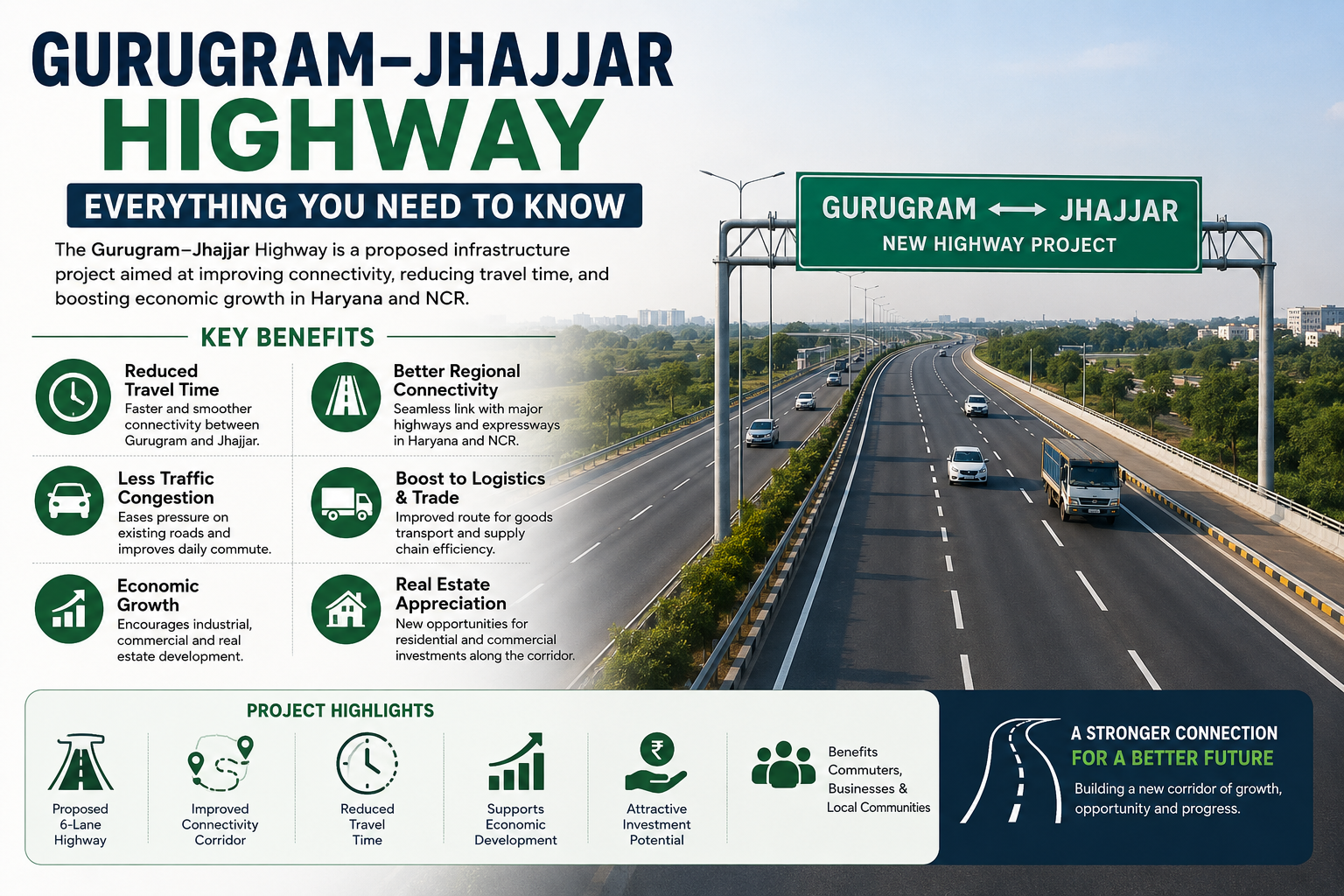
The project is expected to reduce travel time, improve logistics, encourage industrial development, and create new opportunities for real estate investment. It will also help ease traffic congestion on existing roads by offering a faster and more efficient route for commuters and commercial vehicles.
In this comprehensive guide, we’ll cover everything you need to know about the Gurugram–Jhajjar Highway, including its purpose, expected route, benefits, current status, impact on real estate, and future growth potential.
What Is the Gurugram–Jhajjar Highway?
The Gurugram–Jhajjar Highway is a proposed highway project designed to enhance connectivity between Gurugram and Jhajjar in Haryana. The corridor is expected to integrate with major expressways and highways in the region, improving travel efficiency for residents, businesses, and freight operators.
With Gurugram experiencing rapid urbanization, existing roads often face heavy congestion. The new highway is planned to provide an alternative route, helping distribute traffic more effectively while supporting economic growth across nearby regions.
Why Is the Gurugram–Jhajjar Highway Important?
Infrastructure plays a critical role in regional development, and the Gurugram–Jhajjar Highway is expected to become a key transportation link in Haryana.
Some of the primary objectives include:
- Reducing travel time between Gurugram and Jhajjar
- Improving connectivity with major highways and expressways
- Supporting industrial and logistics growth
- Enhancing access to residential and commercial developments
- Reducing traffic congestion on existing roads
- Encouraging balanced regional development
The highway is also expected to improve accessibility to educational institutions, healthcare facilities, industrial parks, and commercial hubs.
Expected Route of the Gurugram–Jhajjar Highway
While the final alignment may be subject to official approvals, the proposed Gurugram–Jhajjar Highway is expected to connect important areas across Haryana and integrate with existing road infrastructure.
The planned route is likely to:
- Connect Gurugram with Jhajjar through a faster corridor
- Improve access to surrounding villages and developing sectors
- Link with major highways and expressways
- Support future infrastructure expansion
As planning progresses, government agencies will finalize the most suitable alignment after evaluating environmental, engineering, and land acquisition considerations.
Current Status of the Project
The Gurugram–Jhajjar Highway remains in the planning and evaluation phase. Authorities have been assessing multiple route options to identify the alignment that offers the best balance between connectivity, construction feasibility, and environmental impact.
Once approvals are completed, the project is expected to move through land acquisition, detailed engineering, and construction before becoming operational.
Residents and investors should rely on official government announcements for confirmed timelines, route details, and project milestones.
Key Benefits of the Gurugram–Jhajjar Highway
1. Faster Travel
One of the biggest advantages of the Gurugram–Jhajjar Highway will be significantly reduced travel time.
Instead of navigating congested city roads, commuters will have access to a faster and more direct route.
2. Better Regional Connectivity
The highway will improve connectivity across Haryana and strengthen transportation links with the NCR.
This will make commuting easier for professionals, businesses, students, and daily travelers.
3. Reduced Traffic Congestion
Existing roads connecting Gurugram and surrounding areas often experience heavy traffic.
The new highway will distribute vehicle movement more efficiently, reducing pressure on urban roads.
4. Improved Logistics
The Gurugram–Jhajjar Highway will benefit logistics companies by enabling faster movement of goods.
Reduced transportation time means lower fuel costs, quicker deliveries, and greater supply chain efficiency.
5. Economic Development
Large infrastructure projects typically encourage commercial growth.
The new highway is expected to attract:
- Warehousing
- Manufacturing
- Retail development
- Logistics parks
- Industrial investments
Impact on Gurugram Real Estate
Infrastructure and real estate often grow together.
The Gurugram–Jhajjar Highway is expected to increase demand for properties located near the proposed corridor.
Potential benefits include:
- Higher property appreciation
- Improved residential demand
- Commercial development
- Better rental opportunities
- Increased investor interest
Developers often focus on areas that receive major infrastructure upgrades, making the highway an important factor for future growth.
Investment Opportunities Along the Highway
Several locations near the proposed highway may benefit from future infrastructure development.
Potential investment options include:
Residential Projects
Improved connectivity often increases demand for apartments, villas, and plotted developments.
Commercial Projects
Office spaces, retail centers, and mixed-use developments could benefit from improved accessibility.
Industrial Development
Manufacturing units and logistics companies may establish operations closer to the highway.
Warehousing
Modern warehouses require excellent road connectivity.
The Gurugram–Jhajjar Highway could support large-scale warehousing projects in the coming years.
Benefits for Businesses
Businesses depend heavily on efficient transportation.
The highway is expected to offer several advantages:
- Faster employee commuting
- Better customer accessibility
- Improved freight movement
- Reduced transportation costs
- Increased business expansion opportunities
This can make the region more attractive for new investments.
How the Highway Supports Haryana’s Growth
The Haryana government has been investing heavily in road infrastructure.
Projects like the Gurugram–Jhajjar Highway complement broader efforts to improve transportation across the state.
Improved infrastructure helps:
- Increase employment
- Attract industries
- Improve trade
- Enhance tourism
- Support urban development
Environmental Considerations
Modern highway projects typically include measures to minimize environmental impact.
These may include:
- Proper drainage systems
- Tree plantation initiatives
- Noise reduction measures
- Rainwater management
- Sustainable construction practices
Balancing development with environmental protection remains an important aspect of infrastructure planning.
Challenges Facing the Project
Like many large infrastructure developments, the Gurugram–Jhajjar Highway may face several challenges.
These include:
Land Acquisition
Acquiring land is often one of the most complex stages.
Environmental Clearances
Government approvals are essential before construction begins.
Budget Management
Large infrastructure investments require significant funding.
Construction Timeline
Unexpected delays can occur due to weather, legal matters, or technical challenges.
Despite these hurdles, the long-term benefits of the project remain significant.
Comparison with Other Infrastructure Projects
The Gurugram–Jhajjar Highway complements several major infrastructure initiatives in the region.
These include:
- Dwarka Expressway
- Delhi–Mumbai Expressway
- KMP Expressway
- Southern Peripheral Road (SPR)
- Gurugram Metro Expansion
Together, these projects are creating a more connected transportation network across NCR.
Who Will Benefit the Most?
The Gurugram–Jhajjar Highway is expected to benefit a wide range of stakeholders.
Daily Commuters
Reduced travel time and improved road conditions.
Homebuyers
Better connectivity often increases residential convenience.
Property Investors
Infrastructure projects typically improve long-term property values.
Businesses
Faster transportation supports commercial growth.
Logistics Companies
Efficient movement of goods reduces operational costs.
Future Outlook
The future of the Gurugram–Jhajjar Highway looks promising.
As Haryana continues expanding its infrastructure network, improved connectivity will play an important role in supporting economic development.
Once completed, the highway is expected to become an important transportation corridor linking Gurugram with Jhajjar and surrounding regions.
The project also aligns with broader efforts to strengthen connectivity across NCR while supporting industrial, commercial, and residential growth.
Frequently Asked Questions (FAQs)
What is the Gurugram-Jhajjar Highway?
It is a proposed highway project designed to improve connectivity between Gurugram and Jhajjar while supporting regional development.
Is the Gurugram–Jhajjar Highway under construction?
The project is currently in the planning and route evaluation stage. Construction timelines will depend on government approvals and land acquisition.
Why is the Gurugram–Jhajjar Highway important?
The highway is expected to reduce travel time, improve logistics, support economic growth, and strengthen connectivity across Haryana and NCR.
Will the highway increase property prices?
Major infrastructure projects often contribute to higher demand and long-term appreciation in nearby residential and commercial areas, although market performance depends on multiple factors.
Who will benefit from the project?
Commuters, businesses, logistics companies, homebuyers, investors, and nearby communities are all expected to benefit from improved connectivity.
Conclusion
The Gurugram–Jhajjar Highway has the potential to become one of Haryana’s most significant infrastructure developments. By improving connectivity, reducing travel time, supporting logistics, and encouraging real estate growth, the project is expected to contribute to the long-term development of the region.
Although the project is still progressing through planning and approvals, it already represents an important step toward creating a stronger and more efficient transportation network for Haryana and the National Capital Region. For commuters, businesses, and investors alike, keeping track of official updates on the Gurugram–Jhajjar Highway will be valuable as the project moves forward.